

Course Prerequisite(s)
- Please note that this course has the following prerequisites which must be completed before it can be accessed
-
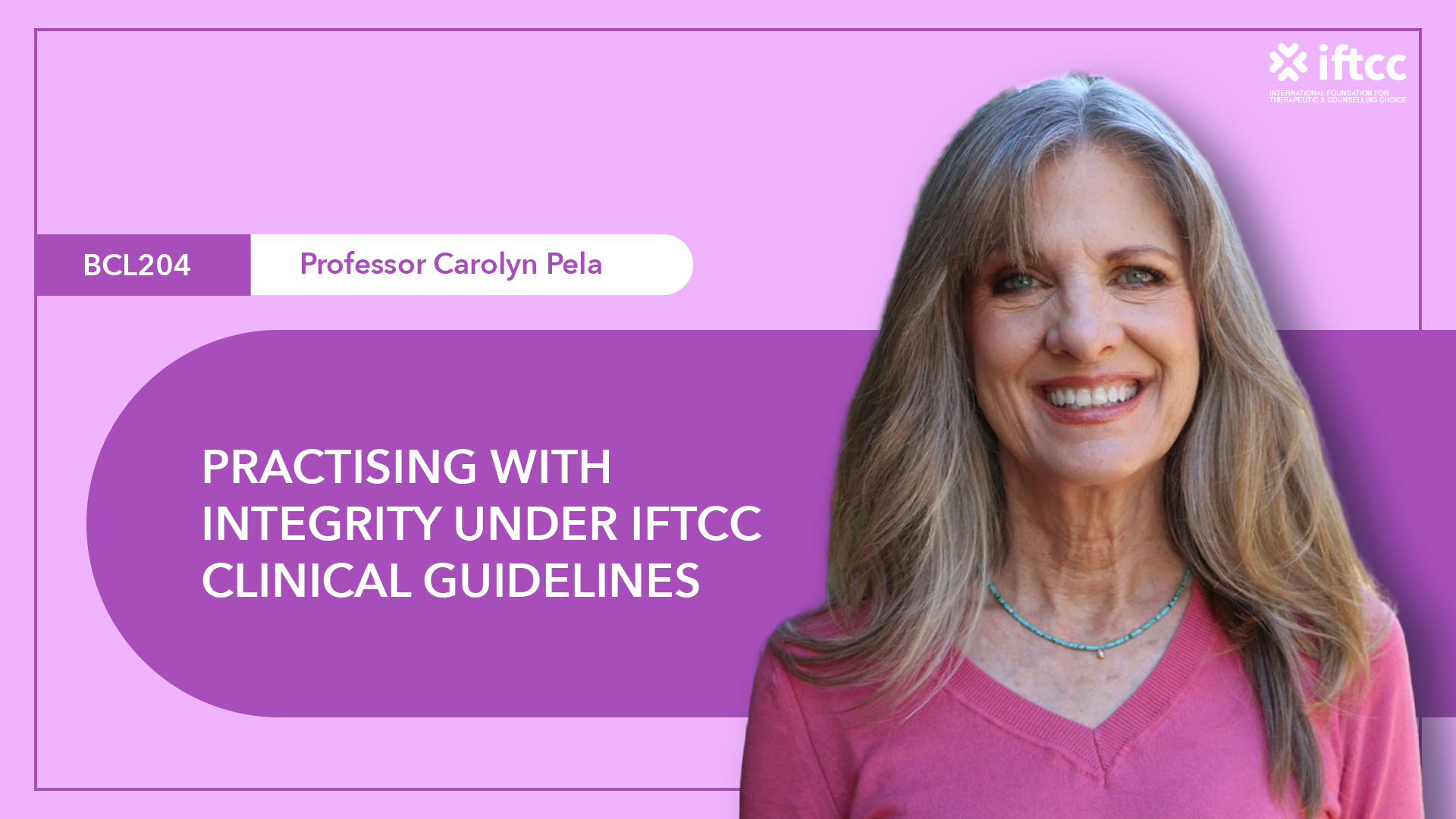 BLC 204 Practisting with Integrity under IFTCC Clinical Guidelines
About Course
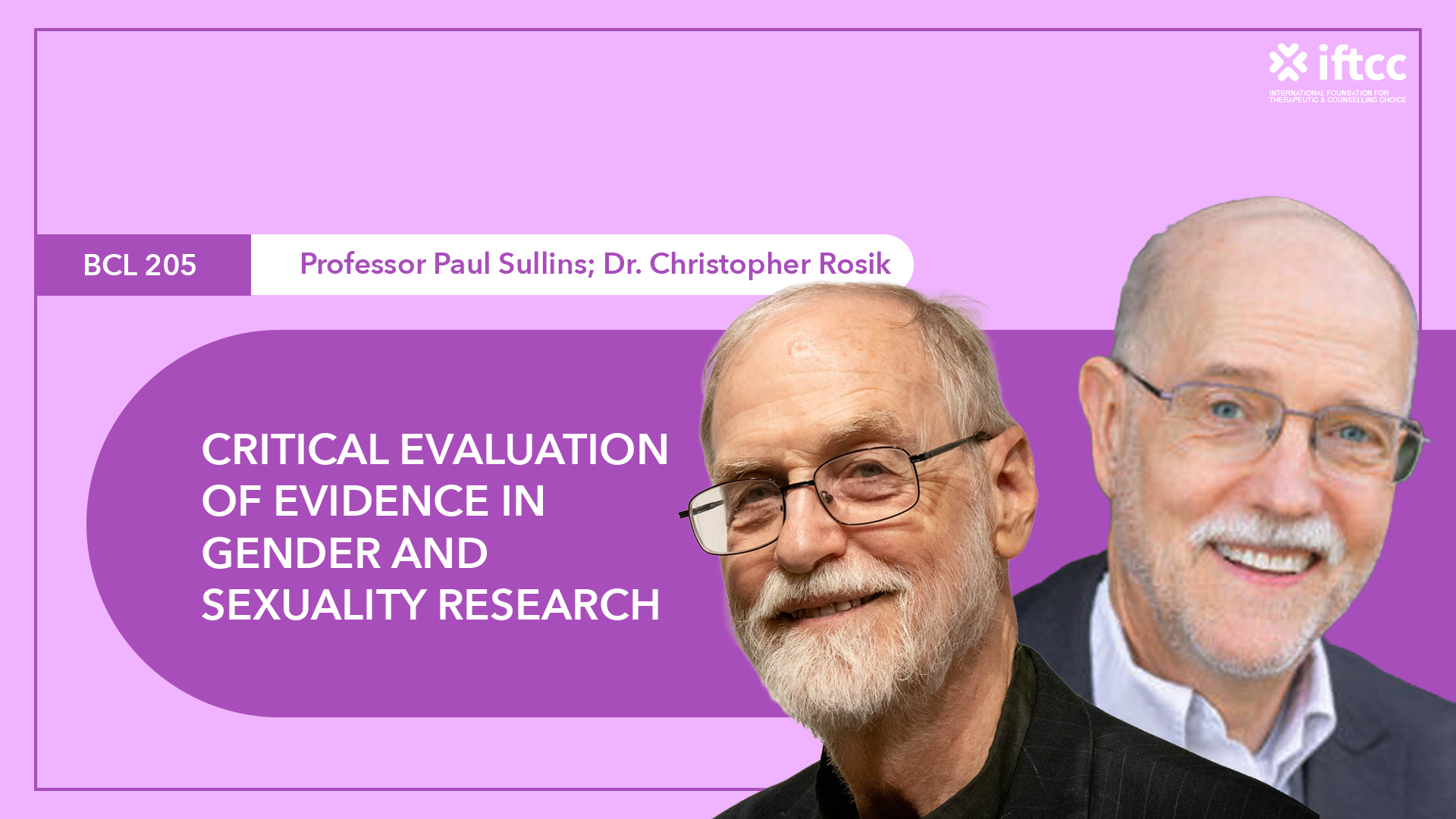
BLC 205 Critical Evaluation of Evidence in Gender and Sexuality Research
Presentations Included:
- Professor Paul Sullins & Dr. Christopher Rosik – Change-Allowing Therapies: Effectiveness & Alleged Harms
- Professor Paul Sullins – Correcting a False Narrative: Sexual Orientation Change Efforts (SOCE) reduces suicide and relieves minority stress, for both minors and adults: Correcting a false research narrative (2021)
- Dr. Christopher Rosik – Are Stigma and Homophonia the Primary Cause of Mental Health Distress for Non-Heterosecuals: The limitations of and alternatives to Minority Stress Theory (2021)
In this course, you will gain the biblical discernment and analytical skills needed to critically assess popular claims against Sexual Attraction Fluidity in Therapy (SAFE-T). Drawing on key presentations from Dr. Christopher Rosik, Prof Paul Sullins, and
international legal contexts, the course helps practitioners develop discernment when confronting cultural and institutional resistance to counselling and therapy that centers human flourishing and is congruent with a biblical worldview. You will gain
clarity on key terms, analyze how harm narratives are constructed through flawed research, learn to refute false research narratives used to discredit biblically aligned therapeutic practices, understand how research distortion shapes legislation and ethics in their field, and develop the ability to respond to regulatory and cultural pressure using accurate data and ethical reasoning.
This course fulfills the following learning goals:
- Define key terms used in policy and public discourse, such as SAFE-T, SOCE, MST, APA, LGBTQIA+, ideology, bias (IFTCC A4).
- Identify common myths about SOCE and the research methods used to support it (IFTCC A4).
- Identify evidence from published research that contradicts the harm narrative (IFTCC A6).
- Explain the role of ideological bias in shaping research framing and publication trends (IFTCC A5).
- Describe how weak research design and manipulative interpretation are used to justify bans and suppress client autonomy (IFTCC A5).
Course Content
Lesson
-
BLC 205 Critical Evaluation of Evidence in Gender and Sexuality Research